

Page reserved
TPTS Treatment (Tensioned Percutaneous Transosseous System)
Dr. Zope's Orthopedic & Physiotherapy Center offers TPTS-based fracture fixation and reconstruction planning for complex fractures, deformities, and post-traumatic bone conditions, using a K-wire-based system for precise, minimally invasive stabilization.
What Is TPTS
(Tensioned Percutaneous
Transosseous System)?
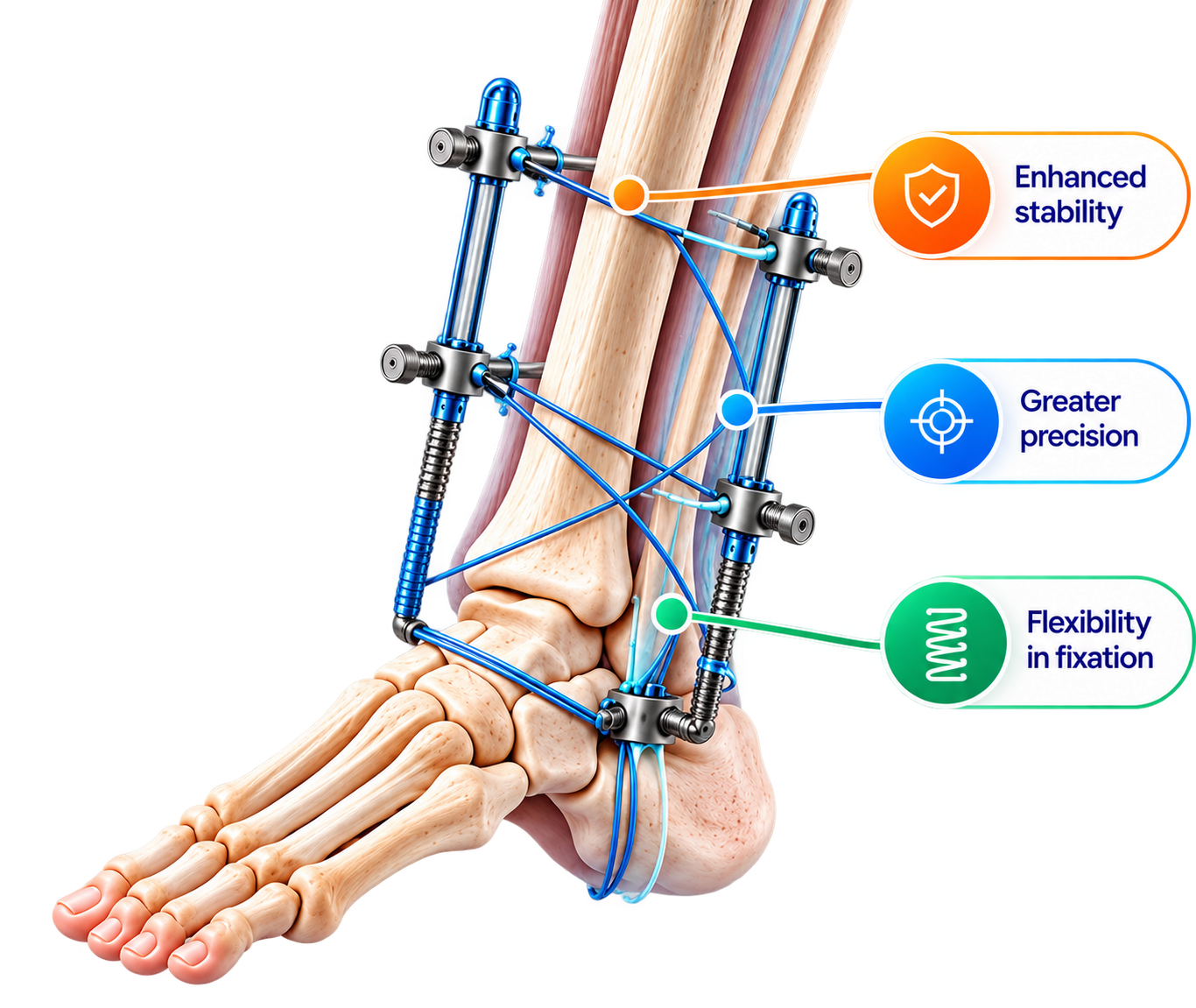
TPTS is an advanced approach in orthopaedic trauma surgery that uses tensioned K-wires, placed percutaneously (through the skin), to stabilize and align fractured or deformed bone.
It is designed to overcome limitations of some traditional fixation methods, offering enhanced stability, flexibility, and precision in bone fixation and healing.
At our clinic in Pimple Saudagar, TPTS-based fixation is considered for selected complex fractures, deformities, and post-traumatic bone reconstruction cases for patients across Pune and PCMC, always following thorough clinical and imaging assessment.
Why TPTS Is Used in
Complex Fracture Care
Precise Bone
Fragment Alignment
K-wires are placed to maintain exact alignment of bone fragments for proper anatomical restoration.
Inter-Fragmentary
Compression
Controlled compression at the fracture site promotes stability and reduces the risk of nonunion or malunion.
Accelerated
Healing Support
The thin, elastic nature of the K-wires supports efficient callus formation, important for robust bone healing.
Minimally Invasive
Approach
Percutaneous placement generally means smaller incisions compared to some open fixation techniques.
Modes of Application
The TPTS system can be adapted to suit the specific needs of each patient, making it a versatile option in orthopedic trauma surgery.
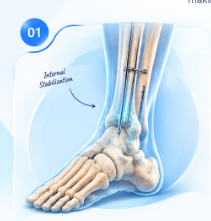
Internal Synthesis
Stable internal fixation provides robust internal support for bone healing, ideal for fractures needing dependable internal stabilization.

Hybrid Synthesis
Combined internal and external methods improve overall control, flexibility, and treatment confidence in intricate orthopedic cases.
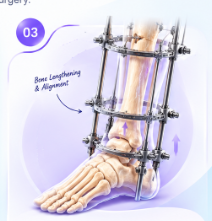
Compression Distraction
/ Transport Synthesis
Advanced bone lengthening and alignment techniques are used for correction and management of severe orthopedic and reconstructive conditions.
When TPTS Fixation May Be Considered
TPTS fixation is typically considered in selected cases where conventional treatment methods may not provide optimal results.
Complex or
comminuted fractures
Needing precise fragment alignment.
Post-traumatic
bone deformities
Requiring correction.
Cases needing
bone lengthening
or reconstruction
After severe injury.
Fractures where
traditional fixation
methods present
limitations
Step-by-Step
TPTS
Treatment Pathway
Clinical and
Imaging Assessment
The fracture pattern, alignment, and complexity are assessed through X-ray and, where needed, further imaging.
Fixation
Planning
The surgeon determines whether TPTS is the appropriate fixation approach and selects the specific mode of application.
Surgical
Fixation
K-wires are placed percutaneously to achieve alignment, compression, or lengthening as clinically indicated.
Recovery and
Rehabilitation
Healing is monitored with periodic imaging, and physiotherapy-guided rehabilitation supports functional recovery.